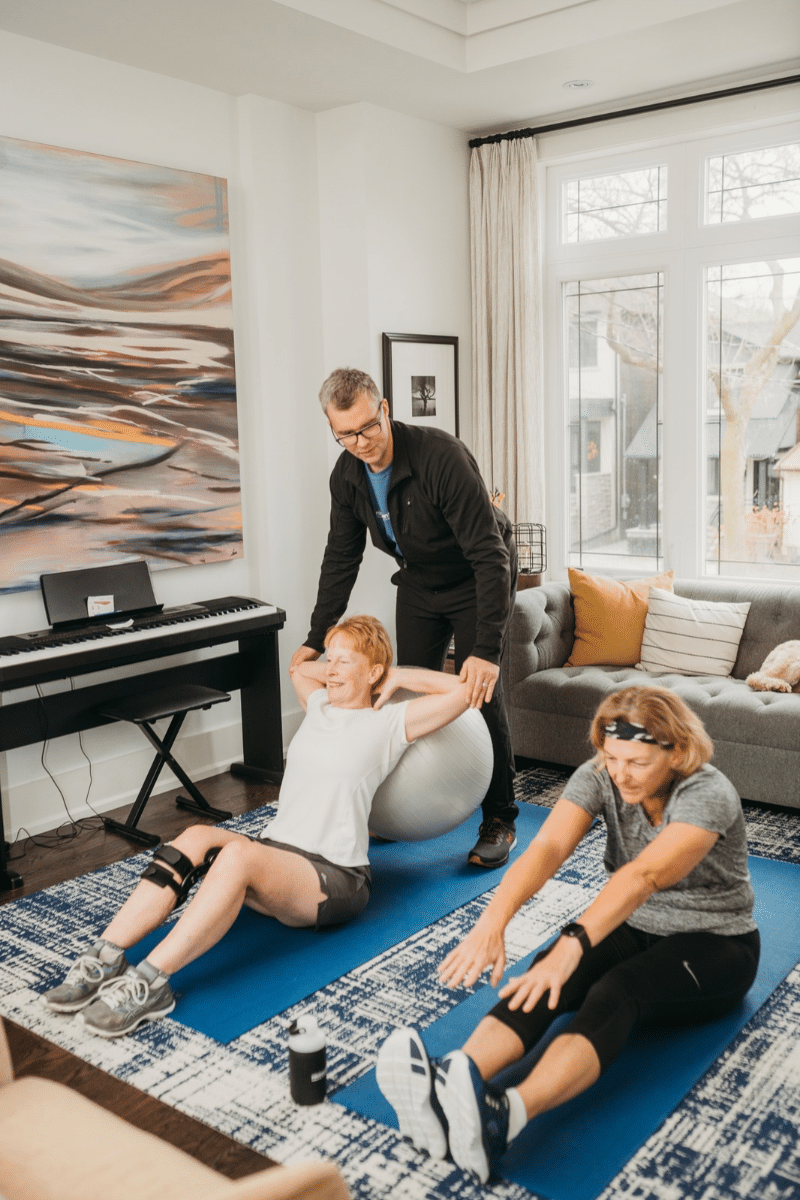
Exercise for Arthritis: How to Build Strength Around Joints
Looking for exercise for arthritis that protects sensitive joints? Our personal trainers explain how to tailor strength training. Book a free consult.

Nielsen Fitness has been Toronto’s trusted in-home personal training company since 2006. We offer premium in-home personal training across Toronto, plus training at our private Leaside studio and live virtual sessions anywhere in Canada, North America (& the world). We work with clients of all ages and fitness levels and specialize in personal training for seniors, adults 50+ and people with special or unique needs such as chronic pain or injury rehab.
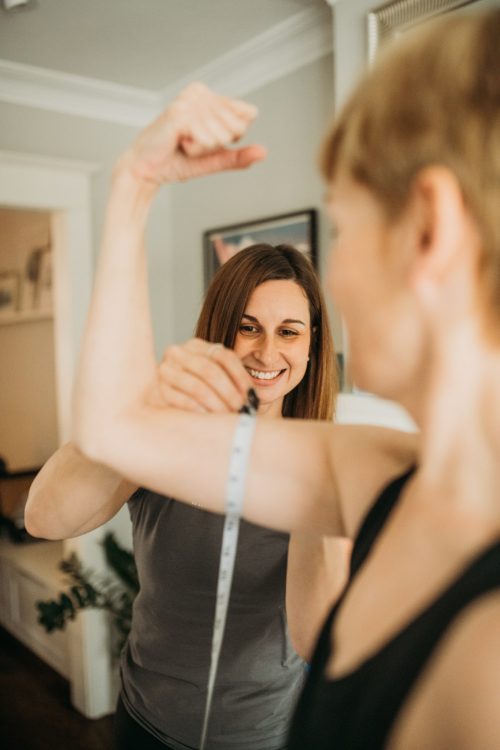
Whether you prefer working out at home, training in our private studio, or joining a live virtual session from anywhere — Nielsen Fitness has a program that fits your life. Our certified personal trainers in Toronto are matched to your goals, schedule, and fitness level.
We are proud to provide in-home personal training throughout Toronto, including North York, Midtown and Etobicoke, and across many parts of the GTA, including portions of Mississauga, Markham, Vaughan and Richmond Hill. You can rest assured that our trainers work in your home, your condo gym or outdoors, seven days a week from early morning into the evening.

We’ve been training clients in Toronto since 2006 with a specialization in older adults and those with special or unique needs. We work with clients in their homes and condos across the GTA and have a fully-equipped private studio in Leaside for those who prefer to exercise outside the home. Plus, for those looking for flexibility and convenience, our online fitness trainer services make it easy to stay active from anywhere. Click below to learn more!
Looking for personal training for seniors in a private studio setting, or an in-home personal trainer serving Toronto and beyond?
Our personal training for the elderly and seniors is designed to build strength, improve balance, and support independence, with programs tailored to your pace, abilities, and goals. Whether in-studio or in the comfort of your own home, our trainers bring the same expert, personalized approach to every session.
The same premium personal training Toronto clients have trusted since 2006 is also available throughout the region. We’ve got you covered.
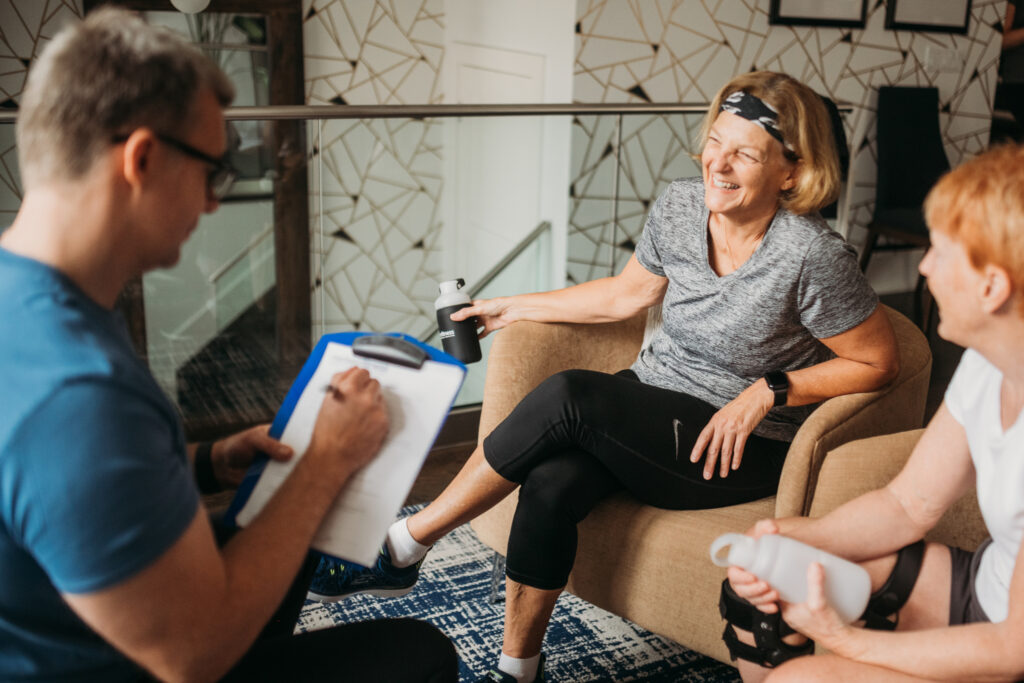
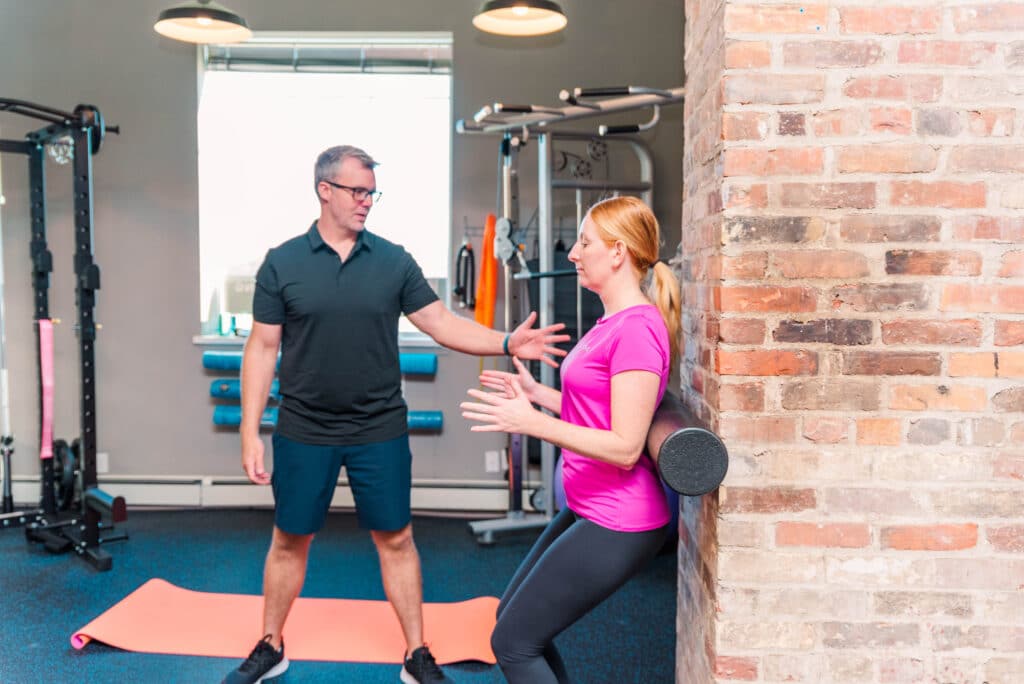
We’ve been training clients in Toronto since 2006 and we’re pretty excited to now be serving our friends down the QEW in Hamilton also! Though we train clients of all ages and fitness levels, we specialize in in-home and virtual training for the elderly, adults 50+ and those with special or unique needs. Click below to learn more!
Enjoy the same incredible results, expert trainers, and (awesome) experience as you’d get in person – all from the comfort of your home with a virtual personal trainer. It’s as simple as logging into a video call. All you need is a screen (laptop or tablet), Internet connection and a small amount of space. You get online personal training in Canada — from a team with 20 years of experience.
Since starting with Nielsen Fitness three years ago, I’ve lost 25 pounds of fat, gained lean muscle, and am now in the best shape of my life. Having routines that are varied and challenging keep it fresh, and the quarterly assessments provide proof of progress.
I wouldn’t be where I am today without Poul and the team at Nielsen Fitness. If you’re looking for honesty, integrity and a long-term partner with your physical health, give them a call.
I started with Nielsen Fitness a few years ago, wanting to work on balance, flexibility and strength after hitting the big ‘5-0’. As a busy professional and have never found time for the gym, but the formula at Nielsen is fantastic, combining the convenience of in-home workouts with awesome trainers.
When I first approached Nielsen Fitness, I was hesitant as I had bad experiences with other gyms and trainers before – but from the first meeting with Poul I realised I had no reason to be. He listened to my fears and asked all the right questions. Before I knew it, I was seeing changes in not only my posture, but my overall health.
We started with Nielsen Fitness seven years ago and have been happy, healthier customers ever since. Our strength and fitness level has improved tremendously. We highly recommend the service to anyone looking to improve their general well-being or trying to meet specific fitness targets.
Nielsen Fitness was one of the first in-home personal training companies to set up shop in Toronto back in 2006. Since then, we’ve built a community of thousands of happy clients, expanded both our offerings and locations, and honed in on supporting those looking for personal training for the elderly, adults 50+ and those with special or unique needs (though we welcome clients of all ages and fitness levels!)
We consider ourselves incredibly lucky to spend our days helping people live longer, healthier, fuller lives through physical fitness – and we’d be delighted to do the same for you.
There are many things that set us apart from the competition, but the most important one is our trainers. We select (and further train) only the best of the best. Our team is a kind and dedicated bunch and, most importantly, each member has a strong understanding of exercise physiology, injury prevention and biomechanics. This is how we ensure your workouts are not only effective but safe and smart too.

Avoid the Common Pitfalls of Choosing a Professional Trainer with Our Insider Knowledge.
Take the first step towards smarter decisions by knowing which questions to ask. Enter your email to receive your FREE guide.

Looking for exercise for arthritis that protects sensitive joints? Our personal trainers explain how to tailor strength training. Book a free consult.

Grip strength after 50 affects groceries, luggage and independence. Learn carries, holds and personal training over 50 tips for total-body strength.
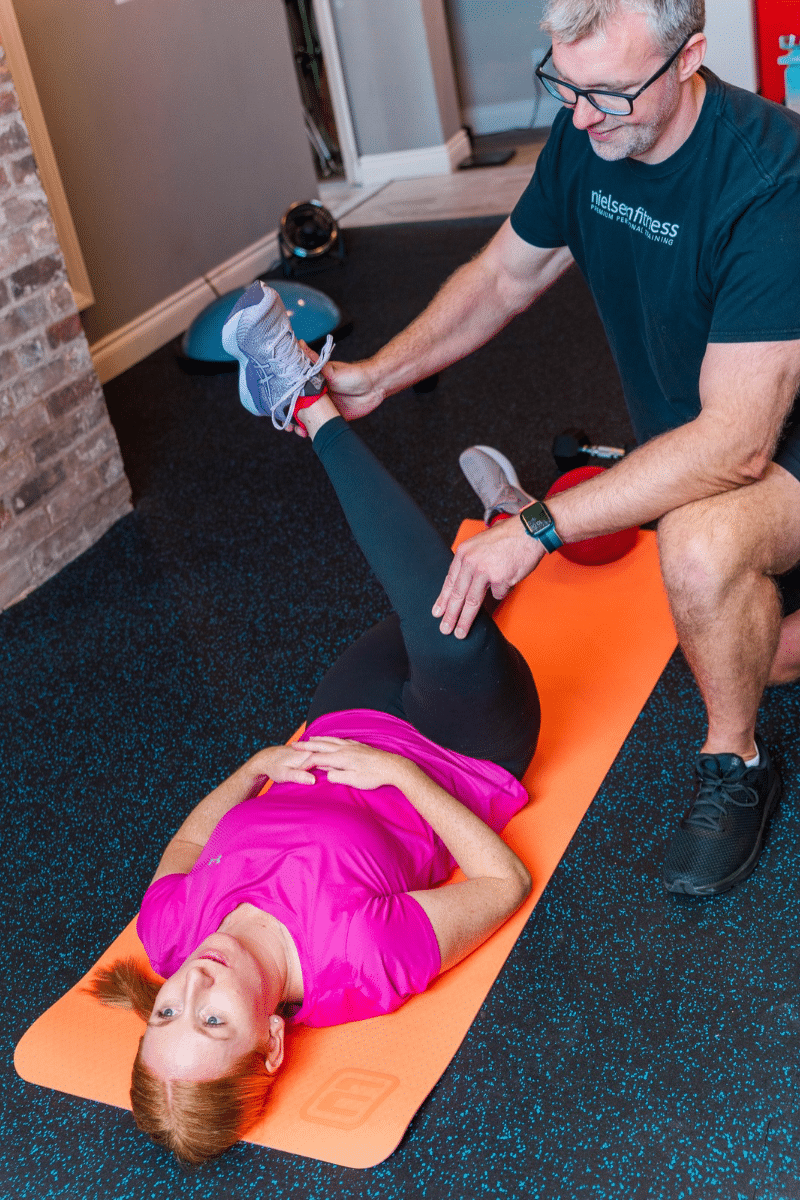
Training too hard can stall progress. Learn the signs your body needs more muscle recovery as well as practical tips from our personal trainers to reset.
Nielsen Fitness has been one of Toronto’s best personal training companies since 2006. Unlike large gyms or app-based programs, every session is fully customized, delivered one-on-one, and backed by a team with deep expertise in exercise physiology, injury prevention, and biomechanics. We also specialize in working with adults 50+ and those with unique physical needs, which is an area where most trainers have limited experience.
Absolutely! It’s one of our core specializations. Our personal training for seniors + older adults means that we understand how the body changes with age and design programs that build functional strength, improve balance, reduce fall risk, and keep you moving well for years to come. Whether your goal is to manage chronic pain, recover from injury, or simply stay active and independent, we’ve got you covered.
Our online sessions are delivered live via video call, not pre-recorded videos or generic programs. Your trainer is fully present, watching your form, correcting technique, and adjusting the workout in real time. Many of our clients find it just as effective as in-person personal trainers in Toronto, especially with the added convenience of being able to train from anywhere in Canada, North America (& the world).
Yes. Our in-home personal training service means you never have to leave your house, condo, or apartment. We bring everything needed for a safe, effective, and fully personalized workout directly to you.